
 Image 1 of 1
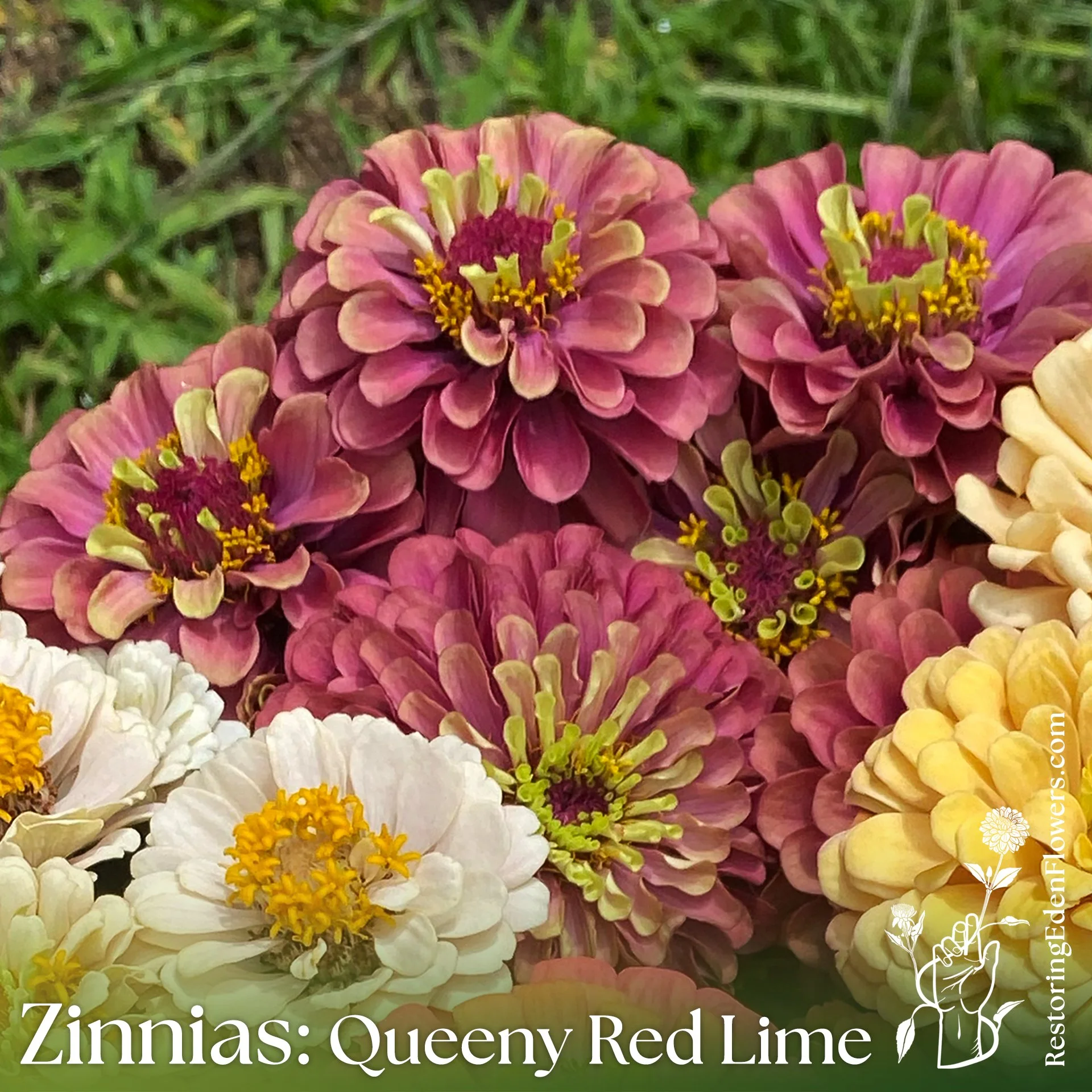
Bold yet beautifully nuanced, Queeny Red Lime offers a striking blend of rich, dramatic color with vintage sophistication. Blooms open in deep cranberry and ruby-red tones, softened by subtle hints of smoky lime and muted chartreuse—creating a moody, antique look that feels both romantic and modern.
Mostly fully double zinnias are held on strong, upright stems, making this variety exceptional for cut-flower production. Plants are highly productive and reliable, delivering an abundance of long-lasting blooms that develop deeper, more complex shading as they mature.
Perfect for adding depth and contrast to bouquets and garden beds alike, Queeny Red Lime brings warmth, elegance, and a touch of old-world charm to the summer garden.
Plant Height: 2.5-3.5’
Packet: 25 seeds
Maturity: ≈80 days
Germination:
3-5 days at 80–85°F (27–29°C). Keep soil evenly moist but not waterlogged.
Sowing:
Transplant (recommended): Start seeds indoors 4 weeks before your last frost. Sow into cell trays or seed-starting containers, covering lightly with soil (about ¼"). Maintain warmth and good airflow. A heat mat may be most effective. Harden off and transplant outdoors once frost risk has passed. Avoid root disturbance, as transplant shock can temporarily cause double-flowering varieties to produce single blooms.
Direct sow: After the last frost, when the soil has warmed. Sow ¼" deep in succession every 2 weeks for longer-lasting yields. Thin seedlings to 9–12" apart for strong, well-branched plants, and pinch initial buds or blooms and deadhead to promote strong branching and bloom production.
Light Preference: Full sun.
Plant Height: Varied by species and conditions, typically between 3-5’ tall.
Plant Spacing: 9–12"
Hardiness: Annual.
Stem Length: 16–28".
Soil Requirements: Rich, soil with steady moisture and high organic content. Ideal pH: 6.3–6.8. Avoid overly fertile soils, which can reduce bloom production.
Uses: Zinnias make for abundant cut flowers and pollinator-friendly garden plantings. Excellent for fresh arrangements.
Bold yet beautifully nuanced, Queeny Red Lime offers a striking blend of rich, dramatic color with vintage sophistication. Blooms open in deep cranberry and ruby-red tones, softened by subtle hints of smoky lime and muted chartreuse—creating a moody, antique look that feels both romantic and modern.
Mostly fully double zinnias are held on strong, upright stems, making this variety exceptional for cut-flower production. Plants are highly productive and reliable, delivering an abundance of long-lasting blooms that develop deeper, more complex shading as they mature.
Perfect for adding depth and contrast to bouquets and garden beds alike, Queeny Red Lime brings warmth, elegance, and a touch of old-world charm to the summer garden.
Plant Height: 2.5-3.5’
Packet: 25 seeds
Maturity: ≈80 days
Germination:
3-5 days at 80–85°F (27–29°C). Keep soil evenly moist but not waterlogged.
Sowing:
Transplant (recommended): Start seeds indoors 4 weeks before your last frost. Sow into cell trays or seed-starting containers, covering lightly with soil (about ¼"). Maintain warmth and good airflow. A heat mat may be most effective. Harden off and transplant outdoors once frost risk has passed. Avoid root disturbance, as transplant shock can temporarily cause double-flowering varieties to produce single blooms.
Direct sow: After the last frost, when the soil has warmed. Sow ¼" deep in succession every 2 weeks for longer-lasting yields. Thin seedlings to 9–12" apart for strong, well-branched plants, and pinch initial buds or blooms and deadhead to promote strong branching and bloom production.
Light Preference: Full sun.
Plant Height: Varied by species and conditions, typically between 3-5’ tall.
Plant Spacing: 9–12"
Hardiness: Annual.
Stem Length: 16–28".
Soil Requirements: Rich, soil with steady moisture and high organic content. Ideal pH: 6.3–6.8. Avoid overly fertile soils, which can reduce bloom production.
Uses: Zinnias make for abundant cut flowers and pollinator-friendly garden plantings. Excellent for fresh arrangements.